The southern West Coast of California and Mexico is shaped by complex geological interactions, including the subduction of the Farallon Plate and the collision between the North American and Pacific Plates. These physical processes, which have defined the region’s environmental past, present, and future, transcend geopolitical borders. However, the researchers investigating these processes often do not. By fostering collaboration between scientists from the US and Mexico, we can enhance our shared understanding of how the Pacific coast will respond to both local and global environmental changes.
This course bridges environmental science, data science, and science communication to address environmental challenges that disregard political boundaries. It aims to cultivate a stronger, bilingual international community of environmental scientists, with a focus on Ventura County, California, and Baja California Sur, Mexico.
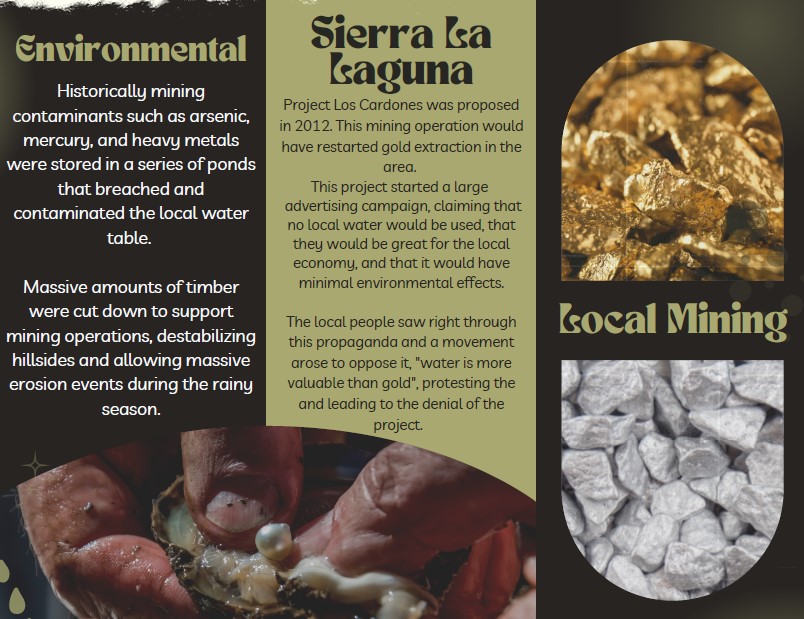
Students will explore topics including watershed science, sustainability, coastal geomorphology, natural hazards, and coastal management. A key component of the course involves creating bilingual infographics to communicate scientific findings to the broader community. The course concludes with a fully scheduled, approximately 9-day field trip, providing hands-on experience in the field.
This is a 3-credit course designed to deepen your understanding of cross-border environmental issues and to foster meaningful international collaboration.